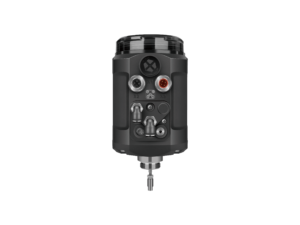
1500 Smart Valve Positioner
Product Overview The POWERFLOW 1500 smart valve positioner is designed to provide reliable and cost-effective valve control for...
View ProductOur products are mainly selected according to valve type, mounting method, and explosion-proof requirements.
For accurate selection support, please contact our sales team.
A conventional valve positioner controls valve movement using pneumatic, mechanical, or analog mechanisms. A smart valve positioner adds microprocessor-based control and electronic feedback for more precise and configurable valve positioning.
Depending on the model, smart positioners may also provide automatic calibration, digital communication, status monitoring, and diagnostic functions that are not typically available with conventional positioners.
No.
An I/P converter primarily converts an electrical current signal, such as 4–20 mA, into a proportional pneumatic pressure signal.
A smart valve positioner performs closed-loop valve position control. It measures the actual valve position, compares it with the requested position, and adjusts the pneumatic output to the actuator to minimize the difference.
Depending on the model, a smart valve positioner may also provide automatic calibration, digital communication, status monitoring, and diagnostic functions.
Yes.
Smart valve positioners can be used with both linear and rotary valve actuators, provided the positioner and mounting arrangement are compatible with the application.
The mounting hardware, travel or rotation range, actuator type, pneumatic output configuration, and feedback mechanism must match the specific valve and actuator.
To select a suitable valve positioner, information about the valve, actuator, control system, air supply, operating environment, and required functions should be confirmed.
Key information typically includes the actuator type, linear travel or rotary angle, single- or double-acting operation, control signal, communication requirements, supply pressure, mounting interface, hazardous-area requirements, position feedback, and environmental conditions.
Providing these details helps ensure that the positioner is compatible with both the actuator and the control system.
Actuator type is an important factor when selecting a valve positioner because the positioner must match the actuator’s motion, operating mode, and mounting arrangement.
For linear actuators, the positioner must be compatible with the required valve travel and feedback mechanism. For rotary actuators, it must support the required rotation angle and mounting interface.
It is also necessary to confirm whether the actuator is single-acting or double-acting, as this determines the required pneumatic output configuration of the positioner. Actuator size, air volume, and required operating speed may also affect the required air capacity.
A volume booster may be required when the valve actuator has a large air volume or when faster opening and closing speeds are required.
The pneumatic output capacity of the valve positioner should first be compared with the actuator volume and required stroking time. If the positioner alone cannot supply or exhaust air quickly enough, a volume booster can be installed to increase pneumatic flow to and from the actuator.
Proper booster adjustment is important, as excessive gain or incorrect bypass adjustment may cause valve hunting or unstable control.
Products referenced across FAQs in this category.
Product Overview The POWERFLOW 1500 smart valve positioner is designed to provide reliable and cost-effective valve control for...
View Product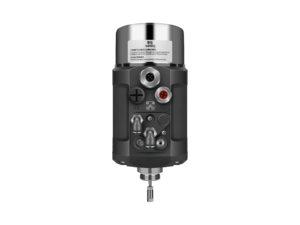
Product Overview The POWERFLOW 1600 smart valve positioner is designed for demanding industrial control applications requiring greater configuration...
View Product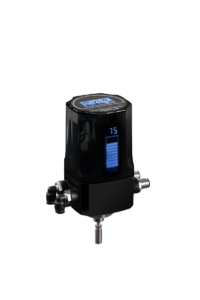
Product Overview The POWERFLOW 1880S smart valve positioner is a compact intelligent controller designed for integrated pneumatic control...
View Product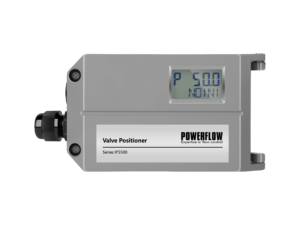
Product Overview The POWERFLOW IP5500 smart valve positioner is designed for pneumatic control valves operating in demanding industrial...
View Product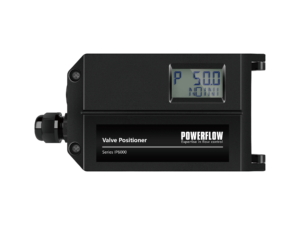
Product Overview The POWERFLOW IP6000 intrinsically safe smart valve positioner is designed for pneumatic control valves installed in...
View Product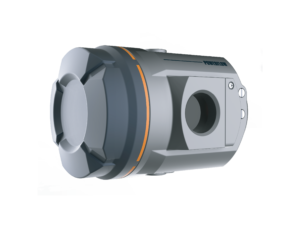
IP6000d Flameproof Smart Valve Positioner The POWERFLOW IP6000d smart valve positioner is designed for pneumatic control valves installed...
View Product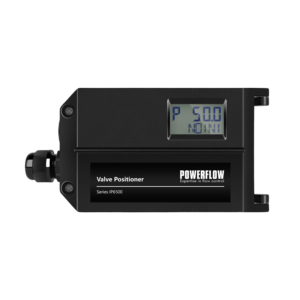
Next-Generation Valve Positioning with Non-Contact Feedback Technology Traditional smart valve positioners rely on mechanical contact components to detect...
View Product Product Overview The POWERFLOW IP6500 is a PROFIBUS PA smart valve positioner designed for precise pneumatic valve control...
View ProductOur engineering team supports product selection, compatibility assessment, commissioning guidance, and OEM customization. Available for projects of any scale.