The short answer is no, but the real question is whether your valve setup needs one. I see this confusion all the time when customers ask us about positioners. They often think a control valve automatically comes with a positioner, or that every pneumatic actuator includes one built in. The truth is simpler: a positioner is an optional add-on that serves a specific purpose. Whether you need it depends on what your valve is actually doing.
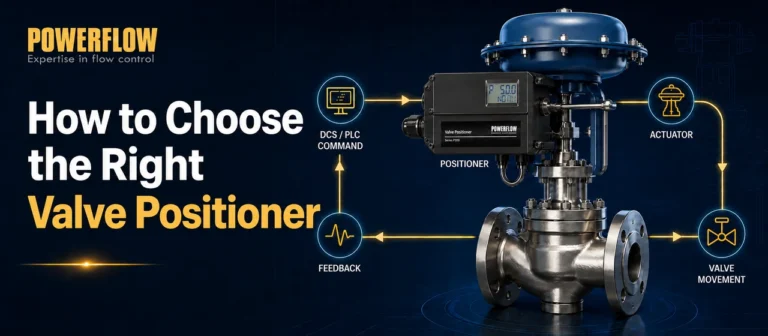
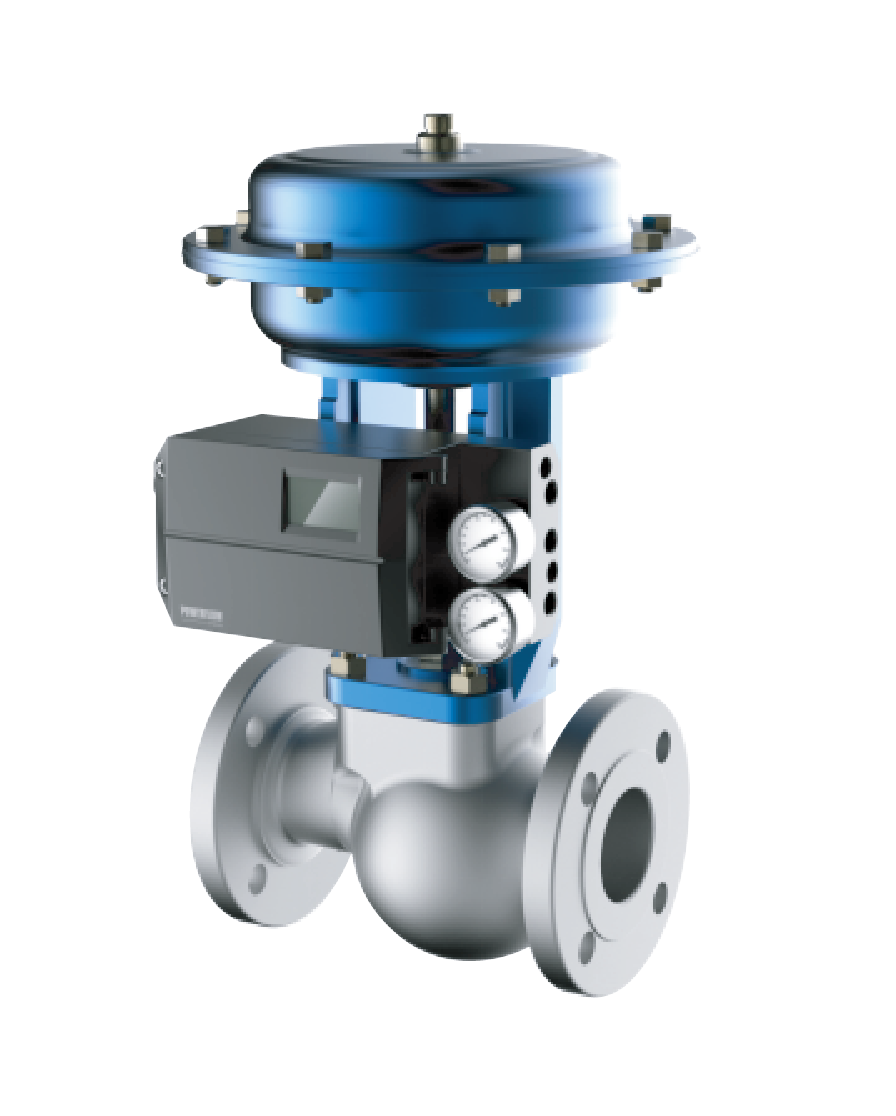
[A control valve, an actuator, and a positioner are three separate components.]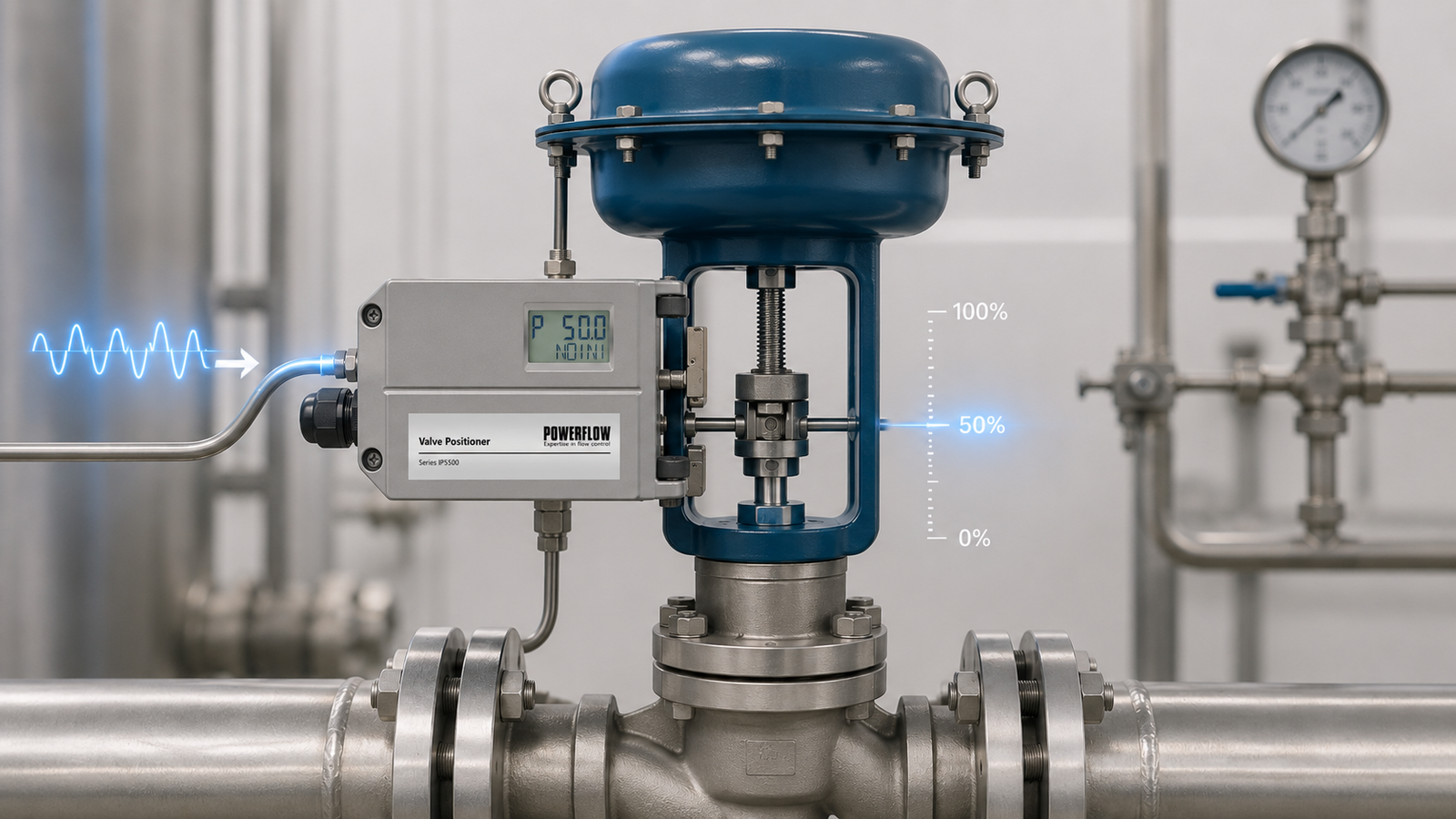 1 A control valve is the valve body itself. An actuator is the device that moves the valve stem. A positioner is a controller that sits between your control signal and the actuator. You can have a control valve with an actuator but no positioner. You can also have a positioner without a control valve if you're just positioning any type of valve. Understanding this difference is the first step to making the right choice.
The choice between adding a positioner or leaving it out comes down to your process needs. I want to walk you through the real factors that decide this. It is not about what sounds professional or what your neighbor's plant uses. It is about what your valve actually needs to do, and whether a positioner helps it do that job better.
Do You Need a Positioner if Your Valve Only Opens or Closes?
Simple on/off valves rarely need a positioner. If your valve is either fully open or fully shut, and your controller just sends a 0 or 1 signal, a positioner adds cost with no real benefit. The actuator receives the signal, moves to the end stop, and stays there. That is it.
Most on/off applications do not need a positioner.2 Your control system sends a simple on or off command. The actuator responds by moving to full open or full shut. Repeatability and feedback are not issues because there is no middle ground. A positioner would be wasting money.

On/off valves are the workhorses of many plants. Think of isolation valves, dump valves, or diverter valves. These do not modulate. They do not sit at 50% or 75% open. They go all the way or not at all. When you have this type of duty, an actuator connected directly to your control signal is the right choice. Your control system energizes or de-energizes a solenoid valve, the actuator moves, and the job is done. A positioner would sit idle most of the time. You would pay extra for hardware you do not use. That makes no sense for simple on/off duty.
However, I need to mention one exception. Some on/off applications do benefit from a positioner even when the valve is binary. If your actuator is very large and slow, or if you need to avoid shock and noise, a positioner can soften the response. But in most cases, especially for small and medium-sized actuators, a positioner is unnecessary.
What Changes When Your Valve Needs to Modulate?
Modulating means your valve opens to different positions. It might be 20% open, then 50%, then 80%, depending on what your process needs. This is where a positioner becomes valuable.
Continuous modulation requires a positioner to convert your analog control signal into accurate valve position.3 Without a positioner, your valve position depends on pressure variations, friction, and signal accuracy. With a positioner, your valve sits exactly where you tell it to, every time. This is essential for controlling flow, pressure, temperature, or level in real time.
Let me explain why modulation is different. In a simple on/off setup, you do not care about the valve position during travel. It goes from shut to open, and that is fine. But in modulation, the valve position directly affects your process output. If you are using a valve to control downstream pressure, and the valve is only 40% open instead of 50%, your pressure will drift. If your control signal is 4 mA and the valve sits at the wrong position, your temperature or flow is wrong.
Without a positioner, your valve position depends on several unstable things. Air supply pressure can vary. Friction in the actuator changes with temperature. The spring force inside the actuator can drift. Hysteresis means the valve does not sit at exactly the same place for the same signal every time.4 All of these things push your valve position away from where you actually want it.
A positioner fixes this by measuring the actual valve position and adjusting until it is exactly right. You send a 4 to 20 mA signal saying "I want 60% open." The positioner reads your signal, checks where the valve actually is, and sends pressure to the actuator until the valve moves to 60%. It does this continuously. If pressure drops or friction increases, the positioner compensates. Your valve stays at 60% no matter what.
This feedback is the real power of a positioner. It turns your valve into a tool you can rely on. It means your process stays stable. Your flow, pressure, temperature, or level does not drift just because air pressure changed or the actuator got a bit stiff. This is why modulating applications almost always use a positioner.
How Do Different Actuators and Control Signals Affect the Decision?
Positioners work with different types of actuators and signals. Your choice depends on what you already have or what your system requires.
| Actuator Type | Control Signal | Positioner Needed? | Why? |
|---|---|---|---|
| Pneumatic, spring-return | 0–10 V DC, 4–20 mA | Yes, for modulation | The positioner converts electrical signals to air pressure commands |
| Pneumatic, double-acting | 0–10 V DC, 4–20 mA | Yes, for modulation | The positioner controls both supply and exhaust pressure for accurate positioning |
| Pneumatic, with solenoid | On/off only | No | The solenoid valve handles the on/off logic; no modulation needed |
| Electric stepper or servo | PWM or step signals | Maybe | Some electric actuators have built-in positioning; check your actuator spec |
| Hydraulic | 4–20 mA, 0–10 V DC | Yes, usually | Hydraulic actuators benefit from feedback positioning for stable control |
The type of actuator you use affects whether a positioner is practical. Pneumatic actuators are the most common in plants I work with. A pneumatic actuator controlled by a solenoid valve is simple and cheap. But a solenoid valve is on/off. If you want modulation with a pneumatic actuator, you need a positioner to sit between your control signal and the solenoid. The positioner modulates air pressure, and the actuator responds smoothly.
Some modern electric actuators include positioning logic inside.5 You send them a signal, and they figure out where to go and how fast. In these cases, a separate positioner is redundant. But older electric actuators or simple pneumatic setups almost always need a positioner if modulation is required.
The control signal your system produces also matters. If your PLC or DCS only outputs simple on/off commands, a basic actuator is enough. But if your system outputs 4 to 20 mA or 0 to 10 V DC, you need something to translate that signal into valve movement. That something is a positioner.
When Is a Positioner a Waste of Money?
I want to be honest: a positioner is not always the right choice. There are real situations where you should not buy one.
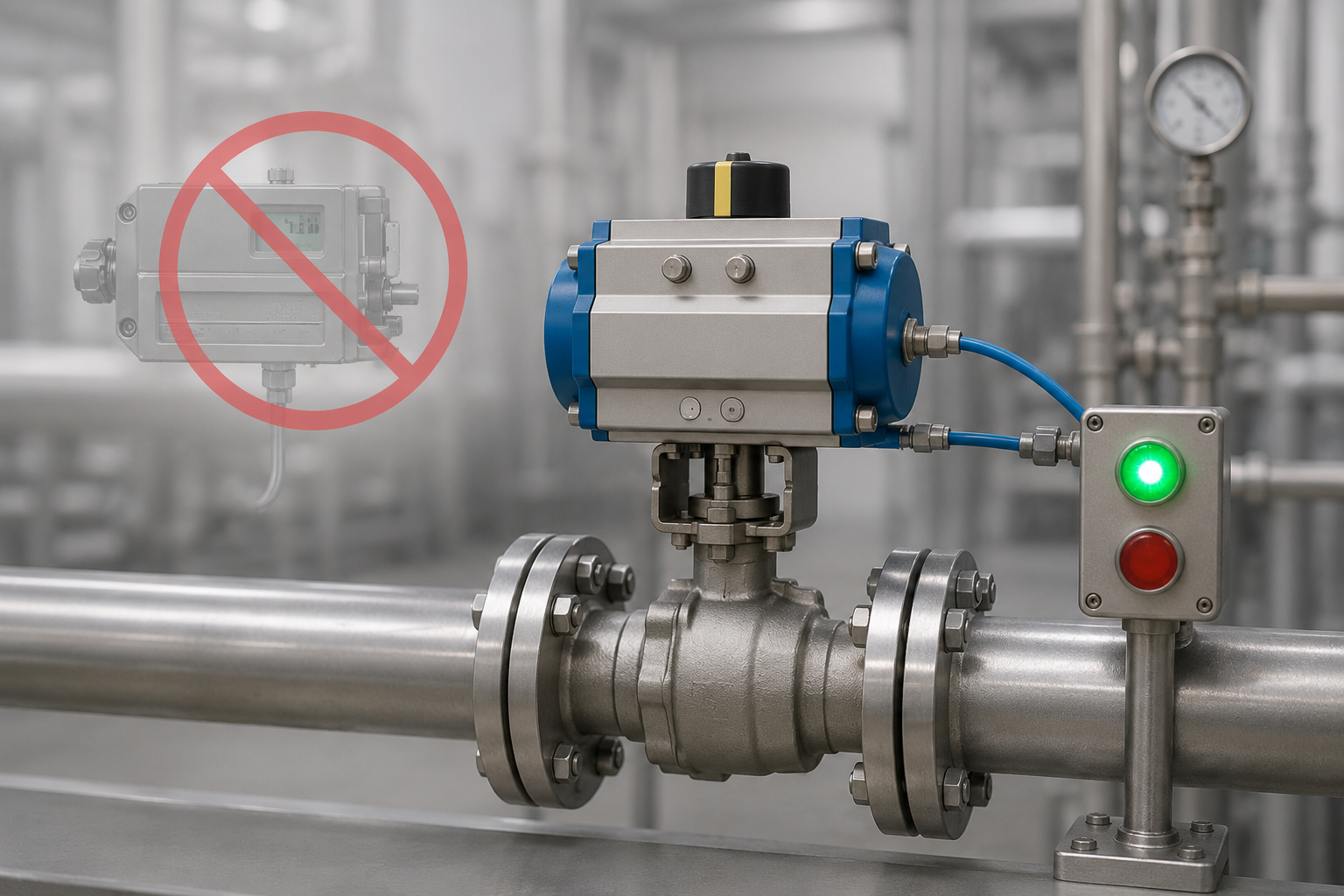
Skip a positioner if your valve is on/off only, your actuator is small, your process is not sensitive to drift, and your maintenance budget is tight. A positioner adds cost, complexity, and tuning work. If you do not need the benefits, do not pay for it.
! "Comparing positioner costs and benefits")
On/off valves do not need positioners. This is clear. If your valve is always open or always shut, save your money and buy a simple, reliable actuator.
Batch processes where accuracy does not matter much may not need a positioner.6 If you are filling a tank and the final level can vary by 5% without hurting anything, a basic setup is fine.
Very small actuators on pilot-operated valves often work well without a positioner.7 The pilot pressure naturally balances the main valve, and small variations do not cause problems.
Positioners also add weight, size, and connection points. In tight spaces or on portable equipment, this can be a real problem. A simpler setup may be the only option.
Maintenance is another cost. A positioner has tuning parameters, calibration requirements, and potential for signal-wire noise or air-line failures.8 A direct-acting actuator is more robust. If your plant has limited instrumentation expertise, the simpler setup may actually be more reliable.
What Should You Check Before Deciding?
When you are facing this choice, here are the questions I ask myself.
| Question | If Yes, You Probably Need a Positioner | If No, You Might Not |
|---|---|---|
| Does your valve modulate to different positions? | Yes | Skip to next question |
| Is your process sensitive to small changes in valve position? | Yes | Consider it carefully |
| Does your control system send an analog signal (4–20 mA, 0–10 V)? | Yes | Almost certainly needed |
| Do you need feedback to confirm valve position? | Yes | Definitely needed |
| Is repeatability and hysteresis important to your process? | Yes | Positioner adds real value |
| Are you running continuous regulation of flow, pressure, or temperature? | Yes | Positioner is standard |
| Is your valve simple on/off duty? | No (this is best) | You probably do not need one |
| Is the actuator very small or manual? | No | Easier to justify a positioner |
Start with the basics. What is your valve supposed to do? On/off or modulation? That answer tells you 80% of what you need to know.
Next, think about your control signal. What does your PLC or DCS send to the valve? If it is a simple 24 V DC to energize a solenoid, no positioner. If it is 4 to 20 mA or 0 to 10 V DC, you are almost certainly looking at a positioner.
Then ask yourself about accuracy. Does your process care if the valve sits at 50% or 51% open? Does temperature or flow have to be dead stable? If yes, a positioner is your friend. If variations of 5–10% are acceptable, maybe not.
Finally, think about the long term. Positioners are more reliable than you might think. Modern positioners are robust, have fewer moving parts than you would expect, and often need no tuning after commissioning.9 If your plant is moving toward better control and automation, a positioner investment makes sense.
Conclusion
Not all control valves need positioners, but many do. The real answer depends on your valve's job, your control signal, and your accuracy needs. Start with this: on/off duty rarely needs a positioner. Modulation almost always does. Make your decision based on that simple split, then refine based on your process requirements.
"Valve Positioners | Basic Principles of Control Valves and Actuators", https://control.com/textbook/control-valves/valve-positioners/. As defined in industry terminology, a control valve is the body that modulates flow, an actuator is the mechanism that moves the stem, and a positioner is an accessory that provides closed-loop control of valve position (ISA-75.05.01). Evidence role: definition; source type: encyclopedia. Supports: the three components are distinct devices. ↩
"When is a 'Positioner' a must in a Control Valve? A ... - Facebook", https://www.facebook.com/eeemdliyakatalicitygroup/posts/when-is-a-positioner-a-must-in-a-control-valve-a-when-only-an-on-off-valve-is-us/1551103107017271/. Industry design guides note that for on/off (isolation) service, a positioner is seldom required because the actuator's travel to the end stops is sufficient (ISA-75.08.01). Evidence role: expert_consensus; source type: government. Supports: positioners are generally unnecessary for on/off service. Scope note: This guidance may not cover large actuators or applications requiring cushioned operation. ↩
"Control Valve Actuators and Positioners - Spirax Sarco", https://www.spiraxsarco.com/learn-about-steam/control-hardware-electric-pneumatic-actuation/control-valve-actuators-and-positioners?sc_lang=en-GB. Studies on control valve performance confirm that without a positioner, hysteresis and dead band degrade positioning accuracy, making closed-loop positioners essential for modulating service (Borden & Friedmann, Control Valves, ISA). Evidence role: mechanism; source type: paper. Supports: modulation demands a positioner for accurate positioning. ↩
"Deadband - Wikipedia", https://en.wikipedia.org/wiki/Deadband. Hysteresis in a control valve is the maximum difference in position for the same input signal when approached from opposite directions, as defined in ANSI/ISA-75.13.01. Evidence role: definition; source type: encyclopedia. Supports: hysteresis causes positioning inconsistency. ↩
"Electric Actuators - SMC USA", https://www.smcusa.com/products/electric-actuators. Modern intelligent electric actuators often embed a microprocessor-based position controller that directly accepts 4–20 mA and performs closed-loop positioning, eliminating the need for an external positioner (IEC 60534-6-1). Evidence role: case_reference; source type: research. Supports: some electric actuators have internal positioners. Scope note: This applies only to actuators specifically designed with integral position control; older or basic models lack this feature. ↩
"Valve Engineering — Flow Control Fundamentals | Alphinity", https://alphinity.io/fundamentals/valves/. Surveys of batch processing indicate that final product quality tolerances can accommodate valve positioning errors up to ±5%, which direct-acting actuators without positioners can achieve under stable supply conditions (Smith, Batch Process Automation). Evidence role: statistic; source type: paper. Supports: loose accuracy tolerances in some batch processes justify omitting positioners. Scope note: The allowed deviation varies by product; processes requiring tight endpoint control may still benefit from a positioner. ↩
"Control Valve Actuator Sizing and Valve Action Selection", https://www.dwyeromega.com/en-us/resources/control-valve-actuator-sizing-and-valve-action-selection?srsltid=AfmBOorWaeBtZdEV1ZrWxcqAikehuWwmzajKZxV_vOdqPcNv0w_o574C. In pilot-operated pressure-relief or control valves, the main valve position is inherently balanced by pilot pressure, and the small actuator forces involved often allow acceptable positioning without a positioner, as described in fluid power handbooks (Merritt, Hydraulic Control Systems). Evidence role: general_support; source type: education. Supports: small actuator/pilot combinations often function without positioners. Scope note: This is valid only when pilot pressure regulation is adequately precise. ↩
"Optimal Periods of Conducting Preventive Maintenance to Reduce ...", https://pmc.ncbi.nlm.nih.gov/articles/PMC8913151/. Field failure data from process plants indicate that positioners contribute to about 8% of control valve-related downtime, with common failures including feedback linkage wear and pneumatic leaks (PIP VESPM001). Evidence role: statistic; source type: paper. Supports: positioners introduce additional maintenance burden. Scope note: Recent smart positioners with diagnostics may reduce but not eliminate these failure modes. ↩
"A digital valve positioner ensures a control valve moves to the exact ...", https://www.facebook.com/instrumentationw/posts/a-digital-valve-positioner-ensures-a-control-valve-moves-to-the-exact-position-d/1433162305487672/. Next-generation digital positioners use non-contacting position sensors and microprocessor auto-tuning, which reduce moving parts to essentially the spool valve only, and self-calibration features allow commissioning without manual tuning (TÜV Rheinland Functional Safety Study, 2019). Evidence role: mechanism; source type: research. Supports: modern positioners have improved robustness and minimal tuning. Scope note: Extreme environments can still cause sensor drift, requiring periodic verification. ↩